On Saturday October 11th, in the early afternoon I received a text from my daughter Isabel’s best friend Charlotte. Charlotte was with Isabel and James at the birth center.
In the text, Charlotte informed me that Isabel had not dilated beyond 8 centimeters, and that she had developed a fever.
My daughter’s active labor had begun in the morning on October 8th. She had been back and forth from the home to the Birth Center several times in the last 48 hours. Isabel’s Mom, Wendy, and I, and Cary were all getting updates from Charlotte.
I was a basket case.
Soon Charlotte texted again to let us know that they were moving Isabel from the Birth Center to the hospital.
I had a sinking feeling. Why was it taking so long?
Was she going to be ok?
I do not experience much fear in my life. At that moment I was afraid.
What was this fever?
In my fear, my hope for her well being became a part of my body, a part of my spirit.
I closed my eyes and prayed.
Dear God, give her rest. Oh God, help her!
**
In addition to being the run-up to Christmas, Advent is the first season in the annual cycle of the church calendar. So when we turn our minds and hearts toward the birth of Jesus, this morning, we also begin the new liturgical year.
Since the church’s liturgical calendar follows the life of Christ, you might think that the beginning of the church calendar would begin with the birth of Christ – but this, as you know, is not the case. If you were to pick up a biography of Dwight Eisenhower or Emily Dickinson, you would likely find the famous person’s birthday recorded somewhere on the first or second page. I always delight in the fact that the Gospels writers – especially our friend Luke – offer us a lengthy overture, and a scene or two, before bringing the main character on stage. Likewise, during Advent we, in the church, spend a month – no less than four Sundays – engaged in lovely, time-worn ritual humming and hawing before the baby Jesus even shows up.
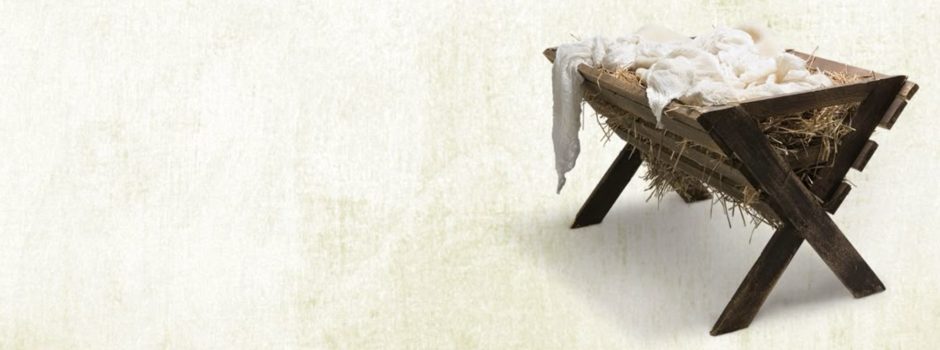
Since we know the outcome – that a healthy baby will be born, be wrapped, as the tradition tells us, in swaddling clothes and laid in a manger (an event proclaimed by a heavenly choir, and witnessed by shepherds and farm yard animals) – our anticipation of Christ’s birth is not colored by the uncertainty and fear that it must have caused in the hearts of his parents.
We tend to think of these stories almost like fables, or fairy tales. I don’t mean that to suggest that we consider them fanciful or less than true. I mean that they contain a certain kind of truth that does not need to pass the test of plausibility. If the gospels were a historical textbook, a biography… or even a novel, we might scrutinize the fine details to see if they check out against our rational understanding of the world. It may be that these stories have become seamlessly incorporated into our tradition because the basic plot elements are reported matter of factly and with scant attention to detail. We are told that Joseph and Mary have to travel to Bethlehem. That she is with child. When they arrive, there is, as the saying goes “no room at the Inn.”
But step a little closer, and recognize them as people instead of characters in a story, and we find ourselves brought into a far more desperate context. Can you imagine how uncomfortable it must have been to be nine months pregnant and travel long distances on the back of a donkey? What do you suppose that would do to the nature and intensity of the poor girl’s contractions?
I shudder to think.
As a father, who has played a “supporting role” in three births, I place myself in Joseph’s shoes when he must report to his tired and bedraggled wife that the warm room at the Inn, which was to comfort the end of their long travel day, was not to be! This development wasn’t just a disappointment – Joseph must have been keenly aware, at that moment, that it would be up to him to make a valiant effort to keep his wife clean in a barn full of animals, while she, in all likelihood, would be screaming in pain. A peasant girl from Nazareth, millennia before the discovery of penicillin, Mary’s chances of surviving a peri-natal infection would be slim. A healthy newborn has never been the foregone conclusion of a pregnancy. There has always been the chance of infant or maternal mortality. Joseph was no obstetrician, but I bet he knew enough to understand the risk that he and Mary were facing.
When the mythic shine is stripped away and we start to perceive the texture in the grain of these stories – the reality of human complication and the frightening proximity of very real danger – the stakes become clearer, and this story becomes one that we can readily recognize as a story of hope.
This first Sunday of Advent is the Sunday that we dedicate to Hope – a ritual that we observe by lighting the candle of Hope.
It’s odd, perhaps, to sneak up on Hope in this way – by talking about what it’s up against… but isn’t it true, in our experience, that hope is most real – most urgent when it appears in the context of hardship?
We see the nativity scene as a done deal – a neatly arranged tableau with familiar characters arranged “just so” on a Hallmark card.
But the nativity is more than that. Much more.
**
In purely practical terms, we can measure the significance of the birth that took place in that barn in Bethlehem by recognizing that we measure the movement of history from that point.
We live in the year 2025. This means that it has been 2 thousand and 25 years since the birth of Christ.
The era before Christ was born was known – for most of our lives, and for generations before us, by the letters “BC” which stood for “Before Christ.” A.D. stood for “Anno Dominie” which is Latin for “Year of our Lord.”
This system of counting the years has become the convention that is followed around the world, in spite of the fact not everyone is Christian.
In recent times, secular society has sought to smooth over this Christo-centric calendar by changing the letters AD to CE – which stands for “Common Era” and BC becomes BCE “Before the Common Era.”
Whether the calculus is religious or secular, though, it remains the case that the event of Christ’s birth has become the fulcrum – the hinge; the moment of transformation; around which human history has been recorded.
This simple practical reality – the name of the year that we live in – shows up in our lives innumerable times everyday. We don’t think about it at all.
But it would not be so if Christianity had not become the official religion of the Roman Empire under Constantine the Great.
It would not be so if, in the 15th century two Cathollic Popes: Nicholas the fifth and Alexander the sixth, had not, through a series of Papal proclamations, given the Christian nations of Europe, the right to subdue and enslave the native peoples of non-Christian lands.
The genocide of the Native peoples of this continent was justified by this doctrine. The kidnapping and enslavement of African people was justified by this doctrine.
Christians – people who called themselves followers of Christ, did these things. They did these things with the Bible in one hand and a sword in the other…
And it is from this legacy that we call the year we live in, the year 2025.
Isn’t it painfully ironic that a little child, born to a peasant woman in a barn in Judea, could mark the beginning of this kind of historical transformation?
If the urgency of hope is felt most deeply by those who are in pain – then the use of Christianity to justify colonialism placed Christians farther away from any divine hope. When Christianity is a tool of empire, it is no longer worthy of that desperate couple who survived the night. That desperate couple whose child survived the night.
**
The Early Church Fathers – some of the first theologians in the early centuries of the Holy Roman Empire, also saw that night in Bethlehem as a turning point – but they were not thinking about things in terms of numbers on calendars.
If you can believe it, they had even bigger fish to fry.
For these early theologians – patriarchs with august names like Justin Martyr, Athanasius and Saint Augustine – Christ represented the turning point, not in the history of the world, but in the salvation of the world.
These men supported different versions of an idea that came to be known as the “Ransom Theory.” You will recognize these ideas – they have become very influential in the way Christians think. THe Ransom theory goes something like this…
When Adam and Eve disobeyed God in the Garden of Eden, they turned away from God. This original sin became our fundamental inheritance and put us effectively under the sway of Satan. Humans could not be saved even if they wanted to. The cards, essentially, were stacked against them. There was only one way to reverse this original sin – and that was to sacrifice a person who was without sin.
Jesus, who was perfect, and born of a virgin, apparently, was the only one who could pay that ransom.
Hence it was that, according to this way of thinking, the birth of Christ on that night in Bethlehem, was the event that made it possible for humans to be saved.
For these Early Church Fathers, the important detail was not that she was a peasant girl, or that she was forced to give birth in a barn.
For them, the important detail was that Mary was a virgin. This allowed her to give birth to a child who was not tainted with original sin.
Doesn’t it strike you as kind of tragic, though, that the universe is set up like a gambling table? Why would God, in order to be reconciled to us, require such a peculiar and cruel payment?
Is this what hope looks like?
I hope not.
**
I was with my daughter, Isabel, when her contractions began.
She said “Ooooh…” in a way that distinctly suggested that she was uncomfortable.
“Something is happening”, she said.
James, her husband and I exchanged a meaningful glance.
It was around noon on October 9th. This was significant because 7 months prior, her midwives had given her this date – October 9th – as her due date.
“If he comes today,” Isabel said “We will know one thing about him: He is punctual!”
Over the next half hour, Isabel’s discomfort increased. But unlike what you see in the movies, there was not even a whiff of panic in the air. Izzy called the midwives, and answered a bunch of questions. She settled down to wait. James quietly took her hand. He was wonderfully even-keeled.
After a while, Isabel asked him to start gathering things together so that they would be ready to go to the birth center when the time came.
James got up and did this. It was deliberate and quiet and beautiful, the way he took care of her – the way they were doing it all together.
They were excited, but they were also aware that things were not going to be easy and they would need each other.
The nativity scene is a fulcrum in history – the juncture of the see-saw where movement and change takes place.
But I do not believe that this fulcrum is the result of a debt that we need to pay at God’s gambling table.
I refuse to honor the idea that, through this birth, and belief in this savior, Christians were given the right to take over the world, and kill and enslave non Christians.
It is a fulcrum because it reveals the actions of the divine in a beautiful and a personal way.
We depend on each other to get through the hardship of birth.
The child depends on us to survive.
We need each other.
Is there any clearer expression of the divine in our lives?
We need each other.
And so, love is born among us.
Amen.